


“It gets ingrained into boys and men that they aren’t big enough, and therefore aren’t good enough” - Dr. James Stevenson, Lead Physician, Bupa Health Clinics
There’s one thing that has become the focal point of male banter, and is placed on a pedestal above all else as being the thing that makes a man, a man.
And that is, of course, the size of his member downstairs.
When I was researching into this topic, I came across threads from men who had anonymously posted that they’ve never even attempted to start an intimate relationship, assuming nobody would want them because of their size. Others talked openly about wanting to take their own lives.
For many men, the idea of what makes them “good men” is deeply entangled with their penis, specifically its length. It’s sometimes easy to underestimate how deeply a man’s penis can impact him. Sometimes it can be a source of masculine pride, other times of unspoken shame. Sometimes both.
Some studies have found that as many as 45% of the population have expressed dissatisfaction and anxiety over their penis size, although I’d wager this number may be under reported.
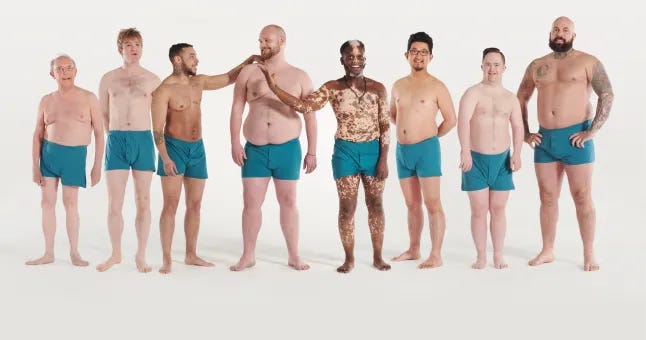
It seems strange really, doesn’t it? To spend so much of our time worrying about the size of an organ. I’m sure we don’t spend half as much time worrying about the size of our heart or lungs, two just as important, if not more so, organs. So why are we so overly concerned with penis size?
There are some biological leanings. For example, testosterone plays a role in penis development during puberty. Although it has no impact on development in adulthood, there may be a belief that a larger penis equals more testosterone which equals more manliness.
If men do think in linear ways, then there’s almost no simpler equation than that. It’s one of the simplest, and sometimes most misleading, equations. Bigger equals better, and bigger equals manlier. We aren’t necessarily always taught it outright, but it’s present; in conversations, in media, in jokes.
These jokes and conversations float from the playground to the pub, from teenagehood to adulthood. And it’s not helped, of course, by the often exaggerated sizes and performances in porn, which is where many are getting their education from.
How do you think a teenage boy or vulnerable man feels when comparing his size to that of a pornstar, sometimes someone twenty years his senior? The truth is, we don’t yet truly know just how far-reaching the impact will be of what anxieties the next generations may carry into the bedroom.
Dr. James Stevenson, a Lead Physician at Bupa, highlights how porn often features unrealistically well-endowed men, when he said to me: “I’ve had quite a few patients come to me who are worried about the size of their penis, because it gets ingrained into boys and men that they aren’t big enough, and therefore aren’t good enough. I have to spend so much of my time re-educating boys and men that everyone is different, you don’t need much size for a healthy sex life.”
Much of what men believe about the size of their penis, and the shame they therefore carry with it, is a culturally and socially shaped narrative, reinforced through humour and in porn. They’re not getting the correct education that they need, and then they’re suppressed into not talking about their shame. But you only have to roll the historical clock back a few thousand years to see that things were different.
In Ancient Greece, small penises were associated with self-control, rationality and wisdom. It’s why when you take trips to local museums and see statues from these times, they’re often carved with small, non-erect penises. On the other hand, larger penises were associated with barbarism, foolishness and uncontrolled lust. That’s why Greek art of grotesque figures generally depicted larger, more erect penises.
Clearly, the Ancient Greeks were onto something, and I’m not talking about size, I’m talking about values. They understood that intelligence and self-control were wise traits to value in their men and so perhaps it’s no wonder they produced some of the greatest philosophical minds in Plato, Socrates and Aristotle. These days it’s much less common to hear men praised for their critical thinking on the form of the soul, save for perhaps academic circles.
As history progressed through to Medieval and Renaissance Europe, penis size often, particularly in Western contexts, became associated with virility, masculinity and social power. One of the more modern psychoanalysts, Sigmund Freud, placed symbolic importance on the phallus, associating it with power and dominance, and this idea influenced Western ideas of masculinity, and no doubt played a part in shaping our cultural narratives today.
Although Freud also said young girls have penis envy, believing that they feel inferior because they don’t have one, and also that boys as young as three develop unconscious sexual desires for their mother, and so harbour resentment towards their father. Ideas which are often heavily criticised due to a lack of empirical evidence, and so perhaps his work is more revealing of a point in time, rather than definitive human behaviour.
But, wherever these beliefs originated from, we now live in a society that often cares more about the external than the internal. Whether it’s conscious or subconscious, we place value on the materialistic and the physical, and that’s how many men measure their worth. In the price tag on their watch or the size of their physical attributes.
Shame doesn’t travel alone, and whether intentional or not, it’s often carried forward on the jokes we make, the conversations we have, the things we value. But it doesn’t need to be this way.
As Dr. James Stevenson said, “the really important thing I want to get across is that everyone, no matter their size, shape, or gender, should be allowed to have a healthy sex life. But men often don’t think that they’re good enough.”
And why don’t they believe they’re good enough? Because they’re measuring themselves up against what they’ve been told matters; physical attributes and external qualities. While there is a place for these, they often aren’t measuring themselves for what’s on the inside too. When a man equates so much of his masculinity with his penis, if he feels shame around it, that shame will haunt him constantly.
So much of this is a societal construct, which has changed throughout periods of history. Perhaps we’re due another cultural shift, one that remembers what’s always mattered more.
Further reading:
Penis size shaming is still too normalised. It’s time to talk about it - a brilliant opinion piece on this often-overlooked aspect of body shaming.
Unhung Heroes: Overcoming Small-Penis Shame- an interesting article that looks at how some people have overcome their shame. Perhaps slightly too on-the-nose in places, but still interesting.
Beliefs about Penis Size: Validation of a Scale for Men Ashamed about Their Penis Size - a study which aimed to validate a method by which a man’s shame about his penis size could actually be measured.
A journaling question:
What would change for you if you no longer saw size or performance as a reflection of your worth?
Let us know what you thought of this!
George and James x